Showing posts with label Israel Pilgrimage 6. Show all posts

Sunday, January 31, 2021

Tel Lachish


Welcome to the City Gate at Lachisch.
 The entrance to the fortified city
 from the time of the Kings of Judah
was via an impressive gateway enclosure
consisting of an outer and inner gatehouse.
The gate at Tel Lachish is the largest one
 in Israel dating to the First Temple period. 
It was discovered in 2016 and fully uncovered in 2018.


In between was an open, paved plaza.
The gateway was the beating heart of the city-
the scene of commerce, judgment and punishment, 
and cultic activities. The prophets spoke in the gateways,
kings sat, and elders and judges
 gathered to hear the latest news.
The gate had a primary military function, 
and guards were posted here,
and the doors were locked at night.


The inner gate from the time of King Hezekiah.

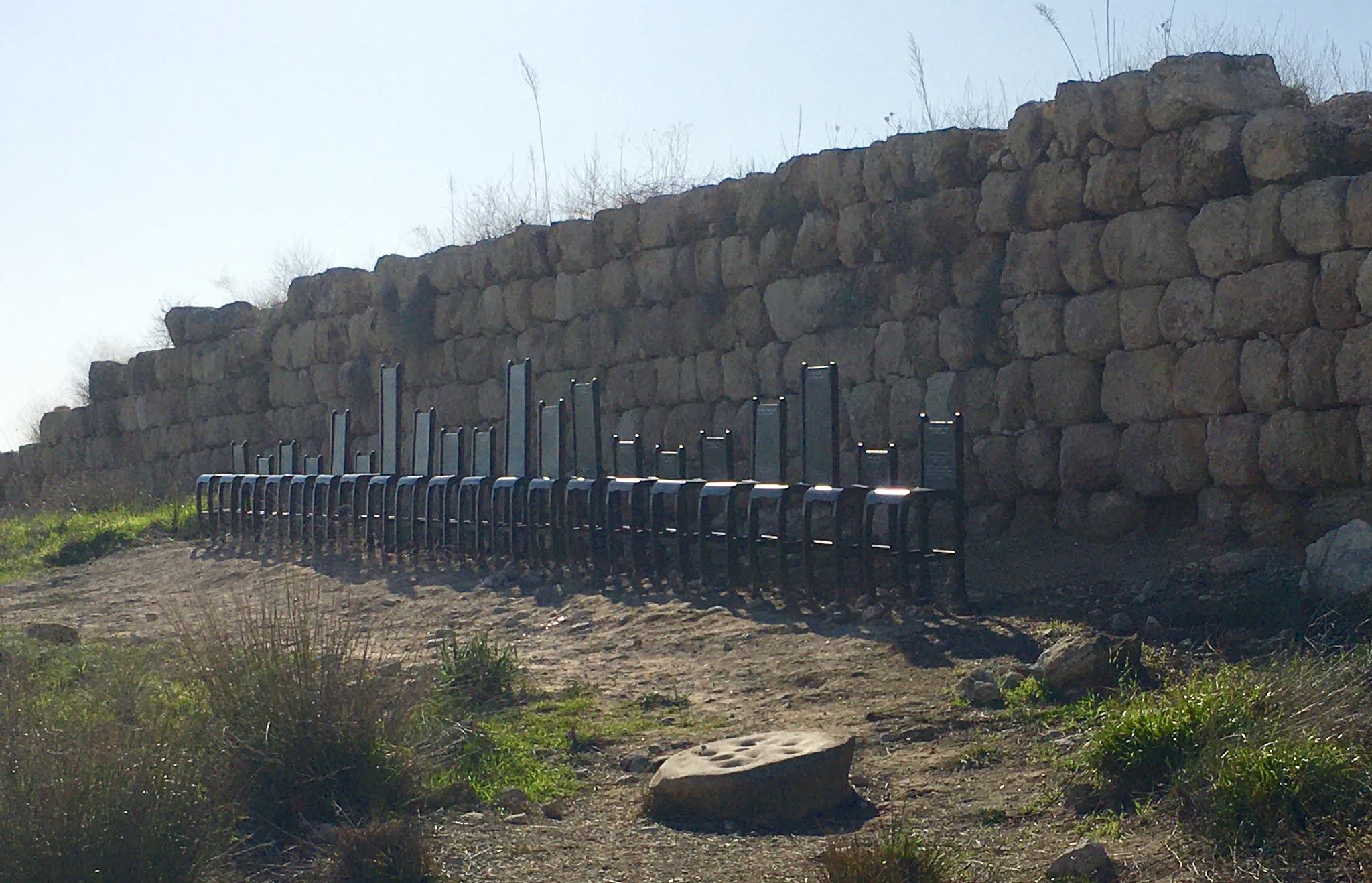
The iron works stand out along the hillside 
depicting the great battles fought here.
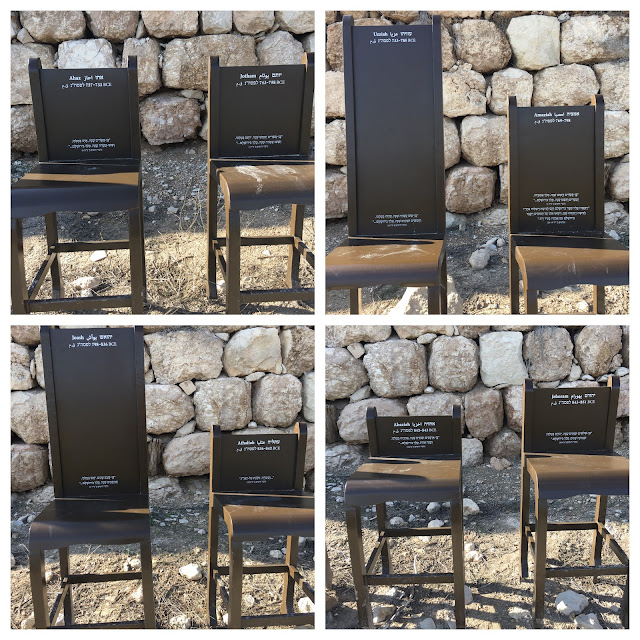
This row of chairs was very impressive. 
The back of the chairs showed
how long each King reigned.


We know the story of Sennacherib's conquest 
of Tel Lachish in 701 BC  from the archaeological record
 as well as the Bible. 
It was also chronicled in wall reliefs 
in the conqueror's palace in Ninevah. 
We were the only people here on the day we visited. 
A couple came as we were leaving. 
This is off the path of normal visitors to Israel,
 but worth a stop.


A  Canaanite Temple was discovered in Feb. 2020 at Lachish
and was one of the biggest discoveries in Israel in 2020.
When they found the city gate a few years ago,
 they found many cult symbols 
and perhaps some of the desecration
 that was part of Hezekiah's rampage 
against the false gods.
                                Hezekiah was a godly king. 
He saw evil on the way and prepared for it, 
but He trusted God. He got ready and He trusted. 
When it went from bad to worse- he still trusted God.
It is hard to take in everything 
of the implications of discoveries at Lachish, 
but that revelation might be the biggest story-
trust God no matter what.


Wednesday, September 23, 2020

Petra, Jordan- Part 2


Some of the landscape of Petra.


Fellow trekker Rev. Aaron Bueltmann -

 checking things out.

 It is the people on this journey

 that made it so much fun.

My brother Kim poses 
with the guards for the journey.
A bit challenging to see all the crew.


Brother-in-law Randy is a long way from Indiana.
Lisa Latall is having a bit
 of fun with Aaron's scarf.
My sister Lee Ann and husband Randy
 finishing up the day of walking.
The horse and buggies can take 
walkers back at the end of the day.
A Map of the spread out area to explore in Petra.
We visited the new museum 
right outside the entrance to Petra.
We did not have time to do that the last time.  
The earthquake of 363 destroyed much of Petra.
The city shifts and begins to lose its urban presence 
and most of the residents convert to Christianity.
There is a Byzantine church at Petra.
Head of a Bearded Man- Nabatean late 1st century 
Medusa- Nabatean-early 1st century AD
Intricate carving
Large vessel- amazing to piece these 
pieces together after all of these years.
We found the CAVE BAR 
and enjoyed a bit of time to talk about our day together.
Full of memories. 
Shared with two siblings and their spouses.
What a treasure- our visit to one
 of the New 7 Wonders of the World- Petra.
We stayed at the Petra Moon this trip.
 There is something about this 
other-worldly place that calls me back. 


Tuesday, September 22, 2020

Petra, Jordan- Part 1


This is the iconic view of the Treasury in Petra, Jordan. This is the most famous structure in this archeological site. It is the 45M high    Al Khazneh, with its ornate Greek-facade facade. Petra dates to around 300 BC and was the capital of the Nabatean Kingdom.  We visited this site for the second time in January 2020. 

The journey to the Treasury
 begins when you get past these two guards.
The trough on the left is part
 of the ancient water system.
Looking up from the "walkway "
 that is called Al Siq, which is a narrow canyon.
An ancient burial spot.
There are many tombs and temples carved into the 
rose-colored sandstone.
That is why it is called the "Rose City."
Finally, after the .75 mile walk 
there is a glimpse of the surprise ahead. 
The Siq literally means "the Shaft", 
and is the main entrance to the ancient Nabatean city
 of Petra in southern Jordan.
This dim, narrow gorge is 
10 feet wide at its widest points. 
The Nabateans were nomadic Arabs
 that made the most of trade routes to secure their wealth.
The amazing colors of the rock at Petra.
More of the many carved rock spaces. This community flourished in the 1st century AD and they were skillful in harvesting rainwater, agriculture and stone carving. At its peak they believe 20,000 people lived here.
At Petra you will see many donkeys 
and locals ALWAYS wanting to give you a ride.
Places along the way they sell their wares.
One of the things to do after some exploring
 is to sit a bit and have some Arabic coffee.
The view outside the window.
Such a stunning view with this blue sky.
One of the things we did not do
 the last time was a camel ride.
I vowed that if I EVER
 got back to Petra, I would ride a camel.
I laughed for pretty much the whole ride.
The caravan is heading out.
It was a lot of fun.
Even the part when I thought
 I would fall right off.
Dusk comes early to Petra in January
 and the walk back begins
 to cast late afternoon shadows.
It is a rather amazing place.
Even on a second visit.
And yes there are scenes from here
 on Indiana Jones and the Last Crusade.